How it behaves
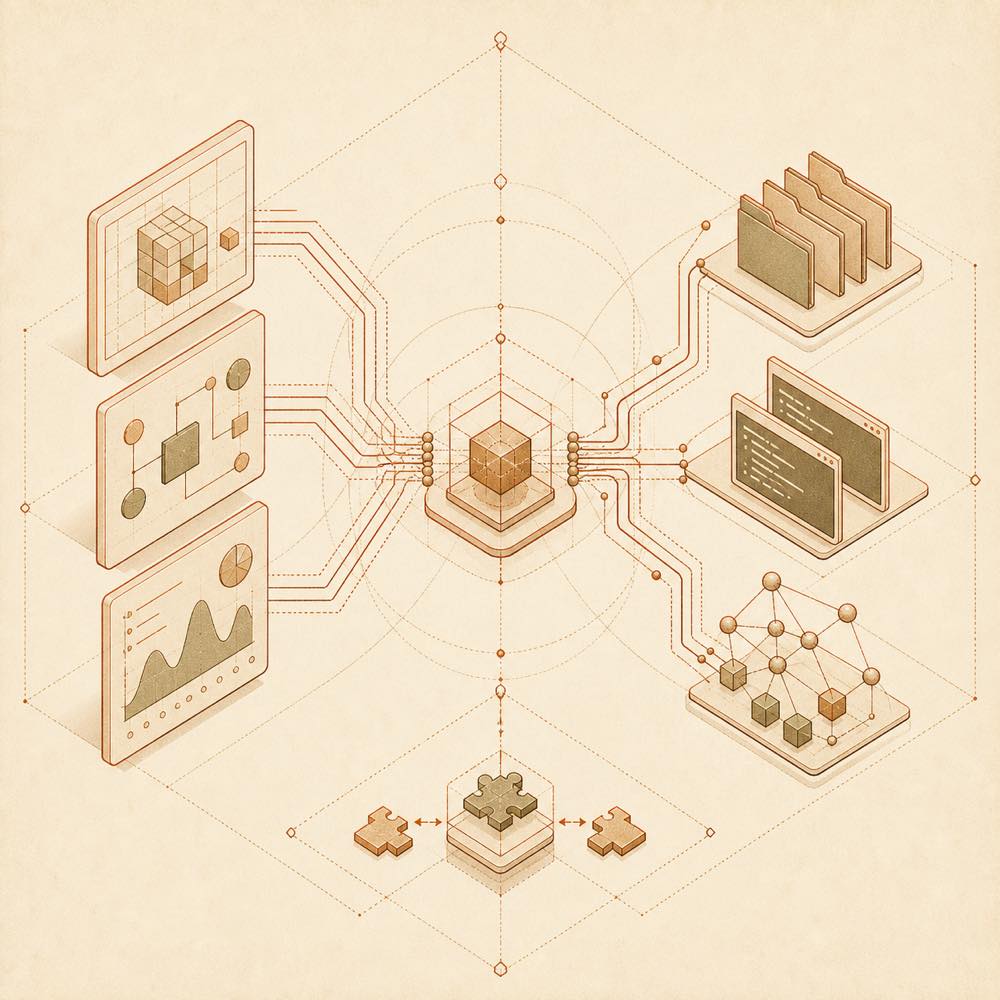
oh-dsh packages a fixed version of DSH and Node runtime with its distribution. Desktop, Web and TUI use the same ohdsh command and share sessions, credentials, skins and plugin caches, but keep independent Profiles. The local workbench includes Workspace, a PTY terminal, browser and file panels, Side chat and Trajectory. Git Review can display workspace changes and commit diffs, add comments to code lines, and perform branch, commit and push actions.
The plugin market supports browsing, categorising, installing, enabling, updating and uninstalling plugins. Changes first appear in an isolated preview and can be applied, inspected or reverted.
Configuration
| Setting |
Behaviour |
~/.ohdsh |
Default location for cache, configuration, sessions, credentials and plugin state |
OH_DSH_HOME |
Replaces the shared data directory |
--port 3080 |
Starts Web on the specified port; the documented default is 3080 at http://127.0.0.1:3080 |
Vision settings and credentials can be changed in the native 设置 → 插件 → 插件配置 → Vision card. @oh-dsh/vision exposes view_image for local Workspace images, HTTP(S) images and image data URLs. TUI uses the same capability through a Workspace image path or URL.
Commands
ohdsh desktop starts Desktop.ohdsh gui is an alias for Desktop.ohdsh web starts Web; ohdsh web --port 3080 selects its port.ohdsh tui starts the Terminal UI.ohdsh web --help and ohdsh tui --help show interface-specific options.
Platforms and package forms
The full distribution contains Desktop, Web, TUI, Node runtime and built-in plugins. Web-only excludes Electron; TUI-only excludes Electron and includes terminal plugins. The README documents macOS, Linux and Windows packages. Web-only and TUI-only archives run from their extracted directories; on Windows, use bin\ohdsh.cmd web or bin\ohdsh.cmd tui.
Requirements
Source builds require Node.js, pnpm and platform build tools. The README does not specify supported version numbers for these requirements.
Written from the project's own documentation and kept in sync with it. Where the two disagree, the source is authoritative — read the README on GitHub