Configuring dsh-game-material-master
DeepSeek Harness presents settings for the external services and local workflow. The README names API keys for image and video generation, with a separate speech key for audio. Image tasks can use a global size of 1K, 2K, 4K, or exact dimensions, or override it per task. The keying background can be green, blue, magenta, cyan, yellow, red, white, black, or a custom colour. Video generation can use MiniMax, ComfyUI, or the optional ToAPIs backend.
Commands and tool actions
DeepSeek Harness exposes one conversational tool, game_material. Its action value selects guide, intake, call, status, wait, review, approve, reviewMode, or upload. Map-agent operations include mapInspect, mapRender, applyMapOps, isoInspect, isoRender, and applyIsoOps. applyMapOps and applyIsoOps support dryRun validation and ifRevision checks. Rendered inspection images are returned as local absolute paths for read_image.
How dsh-game-material-master processes assets
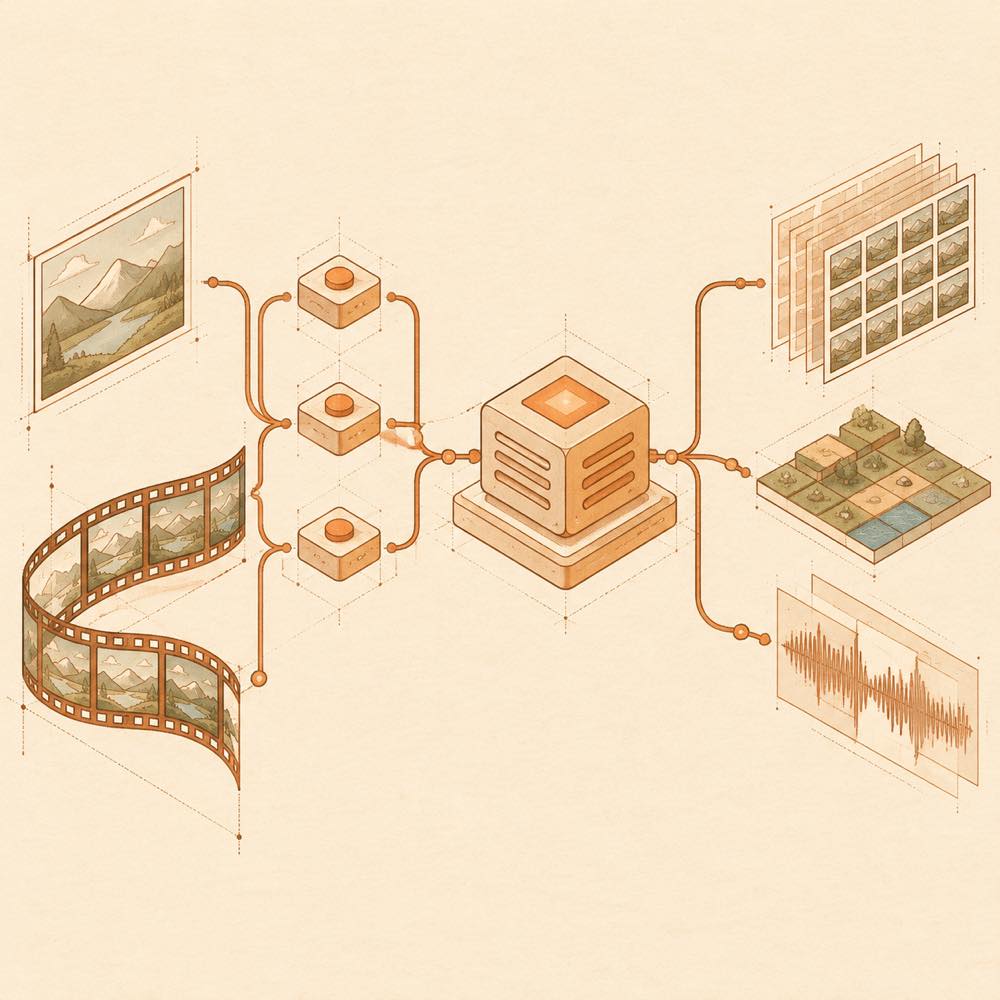
Seedream generates images and MiniMax generates image-to-video results. ComfyUI can replace the video backend. Local ffmpeg processing performs keying, frame extraction, pixel quantisation, compositing, and resizing. The eight-direction workflow writes direction images such as images/<direction>.png; users can also provide local videos instead of generating them. Supported video containers are MP4, MOV, M4V, WebM, MKV, and AVI, with a per-file limit of 100 MB. The map editors export PNG and JSON, and multiple outputs can be packaged as ZIP files.
Known limits
The README does not specify an operating-system requirement or exact configuration-key names. The skeletal-animation module is experimental and may require manual correction; its Spine and DragonBones exports have not received sufficient engine-side validation. External generation and audio calls may incur provider charges, while the 45° and top-down map editors are described as local and model-free.
Written from the project's own documentation and kept in sync with it. Where the two disagree, the source is authoritative — read the README on GitHub