How clearai-dsh behaves
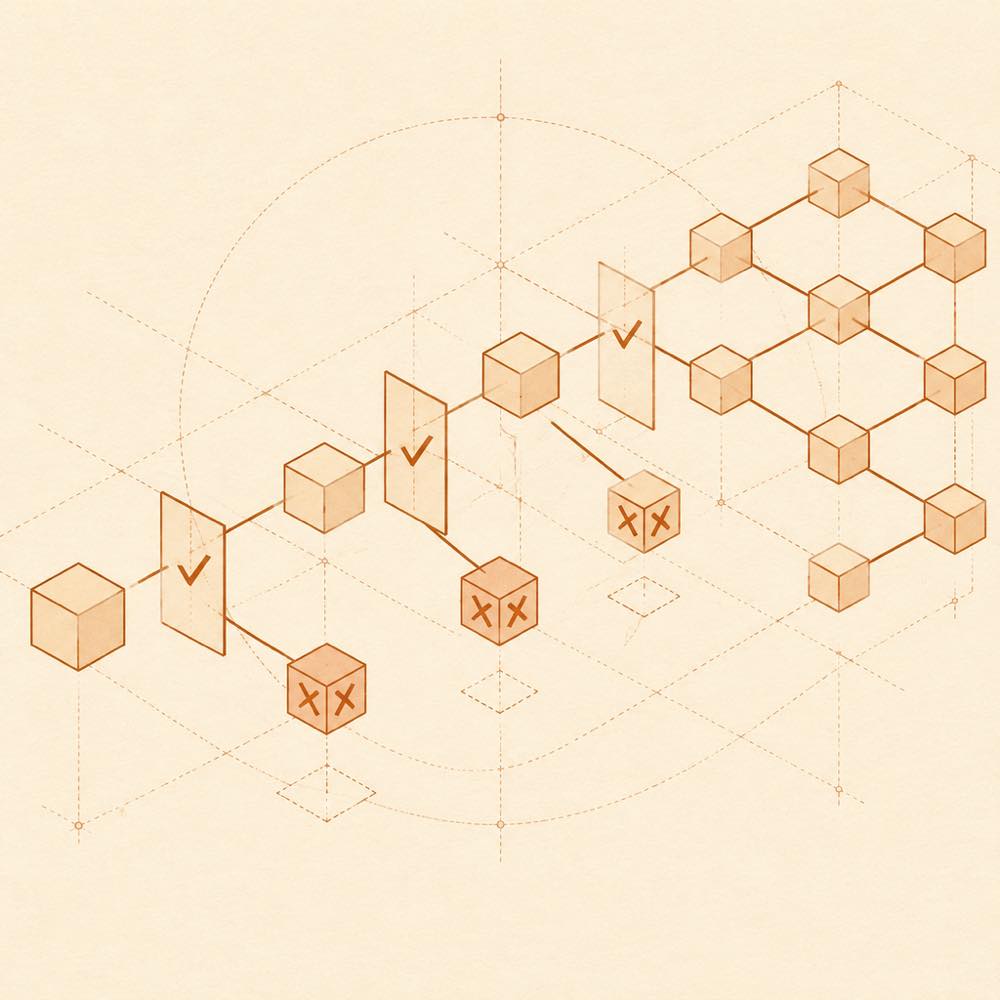
DeepSeek Harness loads clearai-dsh as the ClearAI preset after the plugin is installed and dsh web is restarted. The preset follows an epistemic loop:
- Form a question and state what would disprove it.
- Design a test that could fail.
- Record an observation and its evidence.
- Produce a bounded conclusion.
- Submit higher-level conclusions for independent evaluation.
The session record is the source of derived state. Failed, refuted and inconclusive hypotheses remain in that record rather than being deleted. The resulting ontology contains concepts, predicates, value forms, units, established entries, evidence chains, ontology graphs and entity graphs. Contradictory readings are reported; retaining or retracting them remains a human decision.
Configuring clearai-dsh
The README documents one profile-level pnpm setting relevant to exact version selection:
| Key |
Purpose |
minimumReleaseAgeExclude |
Exempts clearai-dsh from pnpm's release-age delay when added to pnpm-workspace.yaml. |
The setting is optional. Pinning the package version is the other documented way to avoid pnpm selecting an older release under its minimumReleaseAge policy.
Commands and preset selection
DeepSeek Harness uses dsh web to run the web application. After restarting it, select ClearAI in the preset picker at the top of a new session. DeepSeek Harness also exposes plugin installation through the sidebar's Plugins → Add plugin page; the 插件列表 / Plugins Settings page is a read-only inventory, not the installation screen.
Requirements and limits
DeepSeek Harness 0.1.7-alpha.1 or newer is required because that generation introduced the composition declaration line used by this preset. The README reports verification against 0.1.7-rc.2 and 0.2.0-rc.1. clearai-dsh supplies the epistemic contract, ontology and presentation; DeepSeek Harness supplies goal continuation, subagents, questions, deliverable cards and file history. It does not claim recursive self-improvement.
Written from the project's own documentation and kept in sync with it. Where the two disagree, the source is authoritative — read the README on GitHub