DSH Marketplace

dsh-codex-connect

franksong2702/dsh-codex-connect

Connect ChatGPT OAuth and OpenAI Codex models to DeepSeek Harness, with opt-in search and image tools.

12037TypeScriptApache-2.0Source

Install

Add dsh-codex-connect to DeepSeek Harness

via npm

Resolves a published tarball rather than cloning the repository, and installs without any extra setup. Swap `web` for your profile name if you run another one.

via GitHub · npm package

Installing from GitHub runs the project's build script, which pnpm blocks until you allowlist it — run the command once and pnpm prints the exact key to add under `allowBuilds` in ~/.dsh/profiles/web/pnpm-workspace.yaml.

What happened when we ran it

Installed cleanly when we ran it

Every command here is run in a throwaway container against a clean profile, and the result is whatever the harness recorded — not a guess from the source. Last run 19d ago.

Show it in your README

install verified — dshmarketplace

For maintainers: the badge serves this listing's latest sandbox verdict, so a re-run updates it on its own — and it links readers to the full result here.

Due diligence

Before you install dsh-codex-connect

  • Source of record: franksong2702/dsh-codex-connect — present in the community registry that DSH's own plugin market installs from.
  • Licensed under Apache-2.0.
  • Detected: terminal surface. Read the source before granting these.
  • A listing here is not a security review. Plugins run with your agent's permissions.

The AI take

What it is — Integrates ChatGPT OAuth and OpenAI Codex models into DeepSeek Harness with optional search and image tools.

Who it is for — For users conducting conversations in the DeepSeek Harness Composer who need ChatGPT OAuth to access Codex models, this plugin is suitable. Users who rely on built-in models and global search providers do not need to install this plugin.

Watch out — Sandbox testing passed: the plugin installs successfully in a fresh profile and is registered by Harness. It will execute shell commands. No obvious issues found.

The verdict — I would install it because it adds the Codex model provider via ChatGPT OAuth while Harness retains control over tools, permissions, approval prompts, attachments, session persistence, compaction, and recovery, but only if you need Codex models.

Generated by grok-4.6, and a starting point rather than a verdict. Where it says a plugin installs or does not, that is from a real run in a clean profile — everything else is read off the repository. Trust the source over this.

What dsh-codex-connect does

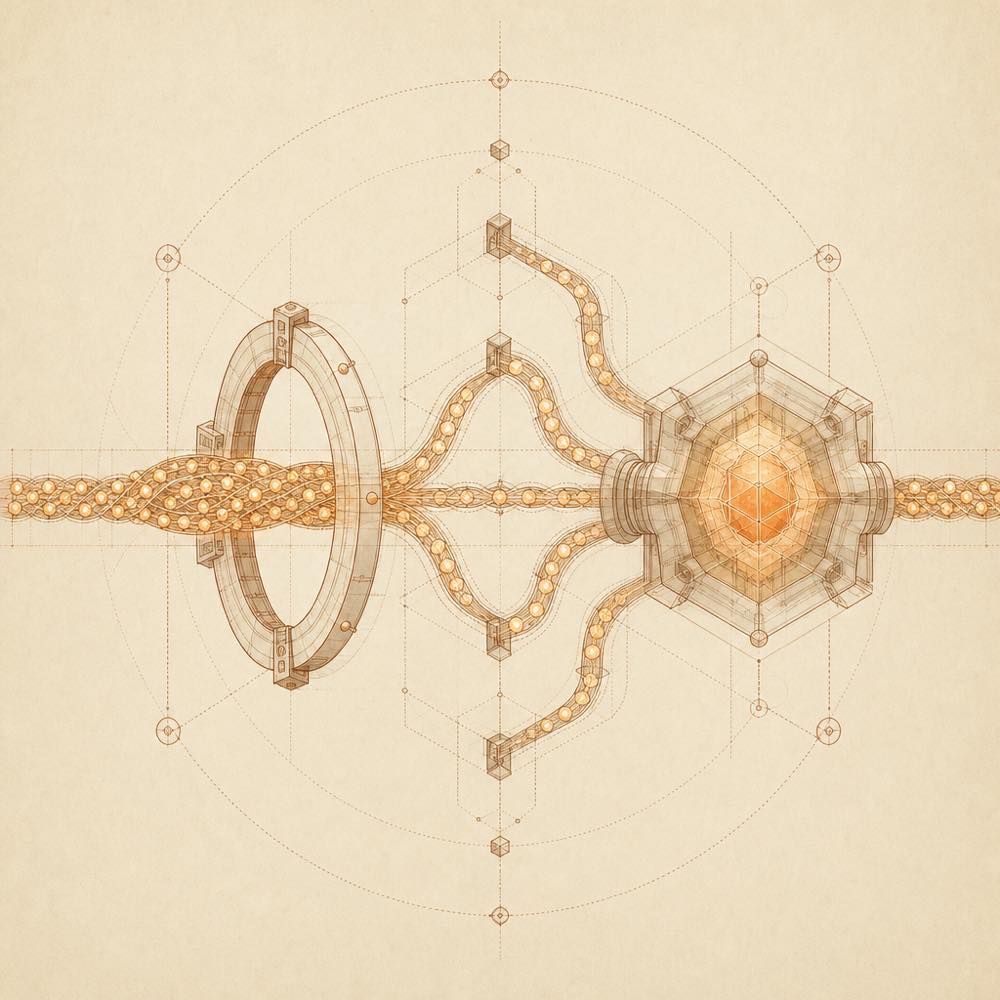
Abstract streams converge through an orbital ring into a translucent processing core.

dsh-codex-connect is a DeepSeek Harness plugin that connects a ChatGPT OAuth account and OpenAI Codex models to an agent session. It adds an openai-codex model catalogue and a separate ChatGPT sign-in flow under Settings → Plugins → Plugin configuration → Codex Connect. Selected models run through DeepSeek Harness's normal LLM service, so streaming, tool calls, reasoning replay, compaction, filesystem controls, permission gates and approval prompts remain managed by DeepSeek Harness.

The installation is additive: it does not change the profile's default model or global search route. Standalone search, view_image and GPT Image generation stay disabled until enabled in the plugin card. The plugin also reads public package metadata, local package metadata and the repository's verified-compatibility.json to report plugin/DeepSeek Harness version compatibility and available updates. It does not run an upgrade command itself.

This is for users with a ChatGPT subscription who want eligible Codex models inside DeepSeek Harness without replacing its existing model and search settings. It is the wrong choice for applications needing an OpenAI Platform API credential: the README explicitly says ChatGPT OAuth is not one. The listed terminal surface is used by the documented dsh installation and update commands; browser approval is also required for sign-in.

dsh-codex-connect documentation

Configuring dsh-codex-connect

DeepSeek Harness loads dsh-codex-connect into a selected profile. Open Settings → Plugins → Plugin configuration → Codex Connect to start the separate ChatGPT OAuth login and manage optional capabilities. The README does not document named configuration keys or environment variables. A new installation displays Not signed in; after browser approval it displays Signed in.

The bundle is additive. DeepSeek Harness keeps the current default model and global search route. Standalone search, view_image and image generation are disabled until explicitly enabled. When an eligible GPT Codex model is selected, the Composer exposes a conversation-scoped Fast Mode toggle and a weekly-quota indicator.

Commands

dsh web starts the web UI for the selected profile. The documented manual update command is dsh plugin --profile web update dsh-codex-connect; web can be replaced with the profile name in use. The plugin does not execute upgrade commands automatically. After an update, restart the profile's DeepSeek Harness Web process if the running process still reports the old version.

Compatibility and updates

The DeepSeek Harness Web server periodically checks public package metadata and verified-compatibility.json from the repository. That file records exact plugin and DeepSeek Harness version pairs. The status can be green for a verified pair, yellow when the latest plugin should be installed first, red when no matching record exists, or gray when the version is unrecorded or the public check fails. A newer-version notice shows user-facing changes and technical release notes, but updating remains manual.

Requirements and limits

A working dsh installation, a ChatGPT account with the required subscription access, and a browser capable of completing OAuth approval are required. If an embedded WebView blocks the sign-in window, the displayed Open ChatGPT sign-in page link opens the flow in the system browser. The plugin does not convert a ChatGPT subscription into an OpenAI Platform API credential.

Written from the project's own documentation and kept in sync with it. Where the two disagree, the source is authoritative — read the README on GitHub

Same category

Alternatives to dsh-codex-connect

1.7k

在 dsh 里装上这个插件即可,无需登录、注册或填 API Key,就能使用包括 DeepSeek V4.1 Flash、Kimi K3 在内的前沿模型——完全免费,不限量。 All you do is install this plugin in dsh: no login, no sign-up, no API key — the frontier models are just there, DeepSeek V4.1 Flash and Kimi K3 among them. Completely free, with no usage cap.

Installed cleanly when we ran it

GitHub sourceJavaScript3d ago

Use ChatGPT (Codex), Claude, and Grok subscriptions as DeepSeek Harness LLM providers, with Settings login, model catalogs, usage, plus image_generate, video_generate, and x_search tools.

Installed cleanly when we ran it

npm packageTypeScript7d ago

AI review

dsh-plugin-subscriptions

What it is — The plugin integrates ChatGPT (Codex), Claude, Grok, and GitHub Copilot subscriptions as LLM providers for DeepSeek Harness via Settings login, without API keys.

Who it is for — If you are using DeepSeek Harness for complex reasoning tasks and have a Claude or ChatGPT subscription, this plugin is suitable. If you use open-source models or non-subscription LLM providers, you can choose other integration methods.

Watch out — Sandbox test passed: it installed successfully in a fresh profile and registered into the harness profile. The plugin requires providing an API key or token to enable features. Claude supports importing credentials from a Claude Code session or using OAuth login.

The verdict — I would install it because it allows direct use of these subscription models in the model picker without manual token management.

Generated by grok-4.6, and a starting point rather than a verdict. Where it says a plugin installs or does not, that is from a real run in a clean profile — everything else is read off the repository. Trust the source over this.Read the source
1Source

Unofficial Command Code LLM provider: registers a `commandcode` route with a live model catalog and reasoning-effort support.

Installed cleanly when we ran it

npm packageTypeScript4d ago

AI review

dsh-commandcode-provider

What it is — This is a DeepSeek Harness plugin that registers a commandcode provider route with a live model catalog and reasoning-effort support.

Who it is for — When performing command code LLM tasks in DeepSeek Harness web or terminal interface, users who need live model catalog and reasoning-effort support should install this plugin. If your work does not depend on Command Code LLM providers, then this plugin is not applicable.

Watch out — The installation requires configuration of API key in the profile. It passed sandbox testing: installed in a new profile and registered by harness. Static check shows it will execute shell commands.

The verdict — I will install it because it supports multi-account rotation that automatically switches accounts when usage limit is reached.

Generated by grok-4.6, and a starting point rather than a verdict. Where it says a plugin installs or does not, that is from a real run in a clean profile — everything else is read off the repository. Trust the source over this.Read the source
LINUX DO1Details
223

Adds a deepseek-web provider that uses chat.deepseek.com web models in DSH, with browser login capture, PoW request signing, SSE streaming, and prompting-based tool calls.

Installs, but needs a build approved first

npm packageJavaScript4d ago

AI review

dsh-deepseek-web-login

What it is — Integrate chat.deepseek.com web browser login state into DSH as LLM provider to drive agent tool calls.

Who it is for — Users performing agent tasks in DSH with DeepSeek web models needing tool calls and image understanding should install it. Users not running DSH or already using official API providers are not suitable.

Watch out — Sandbox testing shows building from source requires manually allowing the build script, otherwise registration cannot complete. It supports PoW solving, SSE streaming, and prompt-based tool calls, but must follow the rule of one account opening only one window.

The verdict — If I needed to run DSH agent using free DeepSeek web model for tool calls, I would install it for the browser login state integration; but it requires manually allowing the build script first.

Generated by grok-4.6, and a starting point rather than a verdict. Where it says a plugin installs or does not, that is from a real run in a clean profile — everything else is read off the repository. Trust the source over this.Read the source
1Source

dsh-our-free-model

zouyuxuan122

219

在 dsh 里装上这个插件即可,无需登录、注册或填 API Key,就能使用包括 Muse Spark 1.3、MiMo V2.6 在内的前沿模型——完全免费,不限量。 All you do is install this plugin in dsh: no login, no sign-up, no API key — the frontier models are just there, Muse Spark 1.3 and MiMo V2.6 among them. Completely free, with no usage cap.

Installed cleanly when we ran it

GitHub sourceJavaScript12d ago

Brings the models in the WorkBuddy desktop app straight into DeepSeek Harness — zero configuration in the DSH chat.

Installed cleanly when we ran it

npm packageTypeScript15d ago

AI review

dsh-workbuddy-connect

What it is — Integrates WorkBuddy desktop app models into DeepSeek Harness for direct DSH chat use with no extra setup, supporting parallel groups from both versions.

Who it is for — If you want to call WorkBuddy GLM-5.3 models in DSH chat on DeepSeek Harness and have WorkBuddy desktop app logged in, you can use it directly. Users who only use built-in models or do not need desktop app support do not need to install it.

Watch out — Sandbox test passed with registration in a fresh profile; no obvious issues found. Shell command execution is a static check note only. Reasoning effort detection may consume a small amount of quota.

The verdict — I would install it because it adds WorkBuddy models to DSH chat with zero extra configuration, but only if you already have the WorkBuddy desktop app logged in.

Generated by grok-4.6, and a starting point rather than a verdict. Where it says a plugin installs or does not, that is from a real run in a clean profile — everything else is read off the repository. Trust the source over this.Read the source
1Source