dsh-automation
titanwings/dsh-automation
Scheduled coding runs in fresh agent sessions with auditable history.
Install
Add dsh-automation to DeepSeek Harness
via GitHub · GitHub source
Installing from GitHub runs the project's build script, which pnpm blocks until you allowlist it — run the command once and pnpm prints the exact key to add under `allowBuilds` in ~/.dsh/profiles/web/pnpm-workspace.yaml.
What happened when we ran it
Installed cleanly when we ran it
Every command here is run in a throwaway container against a clean profile, and the result is whatever the harness recorded — not a guess from the source. Last run 2d ago.
Due diligence
Before you install dsh-automation
- Source of record: titanwings/dsh-automation — present in the community registry that DSH's own plugin market installs from.
- Licensed under MIT.
- Detected: terminal surface. Read the source before granting these.
- A listing here is not a security review. Plugins run with your agent's permissions.
The AI take
What it is — dsh-automation runs self-contained coding tasks on schedule in fresh agent sessions, leaving an auditable run history.
Who it is for — If you need to run recurring or one-shot coding work later without relying on old chat, each in an explicit workspace with permission boundary and inspect the history, dsh-automation fits. For tasks that depend on interactive approval midway through or react to file, HTTP, or process conditions rather than time, users do not need it as it targets time-based standalone executions.
Watch out — Installation from source requires Node.js 22.19 or newer. Sandbox test passed in fresh profile with harness registration. No obvious issues found.
The verdict — I would install it because sandbox tests confirm it runs in fresh sessions with auditable history for standalone coding tasks.
Generated by grok-4.6, and a starting point rather than a verdict. Where it says a plugin installs or does not, that is from a real run in a clean profile — everything else is read off the repository. Trust the source over this.
What dsh-automation does

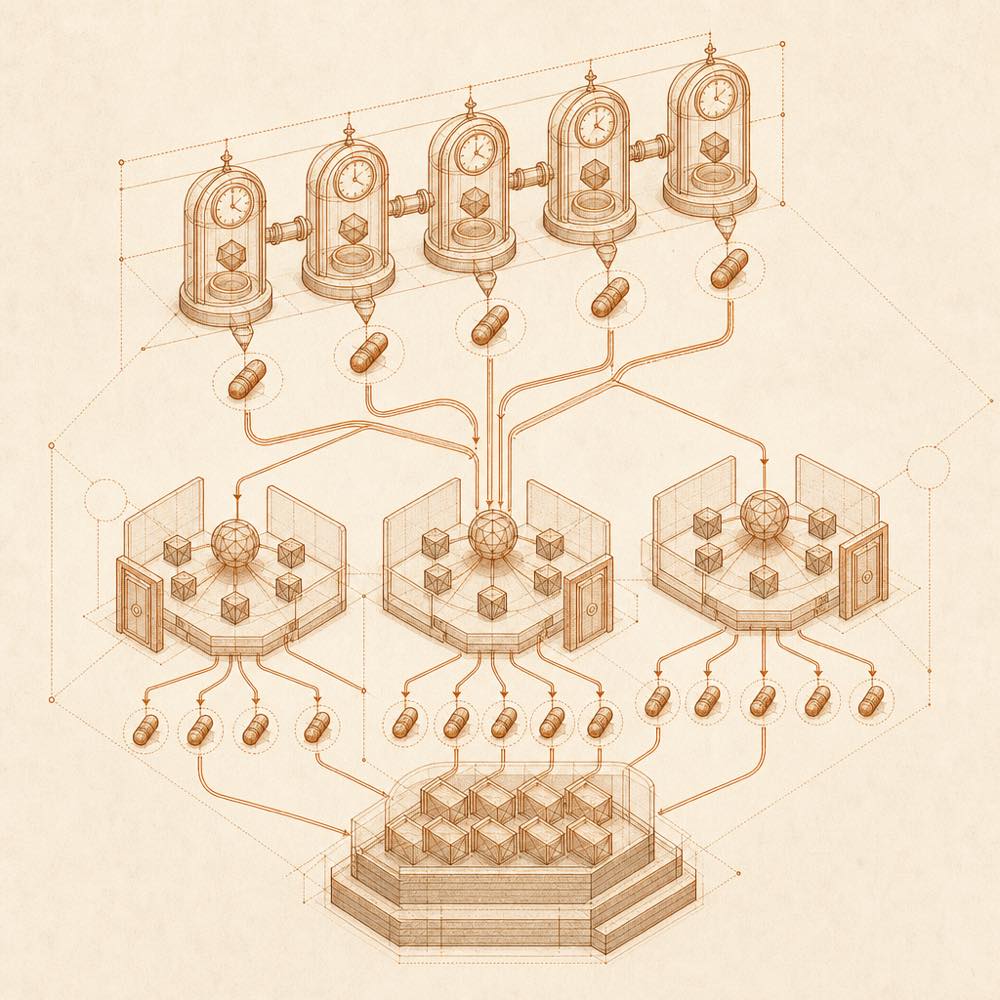
dsh-automation is a DeepSeek Harness plugin that runs self-contained coding tasks on a schedule in fresh agent sessions and keeps durable run records. A schedule can be one-shot, fixed-interval, daily, or weekly; daily and weekly rules use an IANA time zone and are stored as validated RFC 5545 RRULE data. Each occurrence creates a new root Agent and Session rather than returning to an existing conversation.
DeepSeek Harness provides the Web Automations tab and six workspace-scoped agent tools for creating, listing, updating, pausing, resuming, running, and deleting automation definitions. A run uses the saved prompt, captured workspace, cwd, Agent preset, model target, and permission preset. The plugin writes definition revisions and run history containing the scheduled time, target snapshot, result Session ID, bounded summary, terminal status, and structured error. Set archiveRunSessions: true in the Cordis plugin config to archive terminal run Sessions; the default is false.
This is intended for recurring or one-off standalone coding work that can run without unstated chat history or mid-run approval. It is not a replacement for DeepSeek Harness Schedule when a reminder should return to the same live conversation, and it is unsuitable for tasks triggered by file, HTTP, or process conditions. The plugin reaches the terminal through the dispatched coding agent, within the selected workspace and permission boundary, so its activity depends on that agent's permissions.
dsh-automation documentation
How dsh-automation behaves
DeepSeek Harness dispatches each scheduled occurrence into a new root Agent and a new Session. The dispatched input is the saved prompt, not the source conversation history. The run also receives the captured workspace, cwd, Agent preset, model target, permission preset, and an automation message source containing the automation ID, run ID, and scheduled time. The terminal result comes from the actual DSH turn end.
Schedules support one-shot, fixed-interval, daily, and weekly rules. Daily and weekly schedules use an IANA time zone and are normalised to a validated RFC 5545 RRULE. Runs move through queued and running to a terminal state such as succeeded, failed, skipped, or cancelled.
Configuring dsh-automation
Set the following Cordis plugin option when completed run Sessions should be archived from the ordinary DeepSeek Harness conversation list:
| Key | Default | Effect |
|---|---|---|
archiveRunSessions |
false |
Archives terminal run Sessions while retaining their logs and run-history records |
Archived results retain the Session ID, summary, and error in Automations history. Current Harness releases do not expose an unarchive API, so an archived result is labelled rather than given a Session-open action. Retention removes only the oldest terminal records; queued and running records are not pruned. Updating a definition increments its revision, and retained runs identify the revision they executed. Deleting a definition does not immediately delete its run records.
Commands and management tools
DeepSeek Harness exposes the Automations conversation tab in the Web profile. An eligible root Agent can use workspace-scoped management tools, including automation_create, automation_list, automation_update, and the controls for running, pausing, resuming, and deleting automations. These operations apply only to the Agent's exact workspace.
Requirements and limits
The README requires Node.js 22.19 or newer. Install the GitHub bundle into the DeepSeek Harness web profile and restart dsh web. The task must be self-contained: work that depends on unstated chat history, interactive approval, or non-time conditions is outside this plugin's documented use.
Written from the project's own documentation and kept in sync with it. Where the two disagree, the source is authoritative — read the README on GitHub
Same category
Alternatives to dsh-automation
dsh-plugin
Tabbit-Browser
Tabbit Broser plugins for Deepseek Harness
Installed cleanly when we ran it
dsh_workflow
icetomoyo
UltraCode-style multi-agent orchestration: a generatable, savable, governable, observable, resumable workflow layer.
Installed cleanly when we ran it
mstar-harness
btspoony
Skill-driven harness/loop engineering workflow agent plugin.
Installed cleanly when we ran it
agent_team_gui
toolclub
Reusable agent squads with per-agent provider/model routes and tool policies, serial/parallel dispatch, spawn/fork/chain context modes, and a Web management panel.
Installs, but needs a build approved first
dsh-agent-team-gui
toolclub
Global persistent agent squads with per-agent model/tool policies: manage them in Settings, select and toggle one per conversation, then collaborate on normal sends in a fixed or model-planned order.
Installs, but needs a build approved first