DSH Marketplace

OpenViking Memory Plugin

volcengine/OpenViking#examples/dsh-memory-plugin

OpenViking memory and context bundle for DeepSeek Harness: pre-step auto-recall and profile injection, session capture, `viking://` URI guarding, and recall/write memory tools backed by an OpenViking server.

35,7812,727PythonAGPL-3.0Source

Install

Add dsh-memory-plugin to DeepSeek Harness

via npm

Resolves a published tarball rather than cloning the repository, and installs without any extra setup. Swap `web` for your profile name if you run another one.

What happened when we ran it

Installed cleanly when we ran it

Every command here is run in a throwaway container against a clean profile, and the result is whatever the harness recorded — not a guess from the source. Last run 7d ago.

Show it in your README

install verified — dshmarketplace

For maintainers: the badge serves this listing's latest sandbox verdict, so a re-run updates it on its own — and it links readers to the full result here.

Due diligence

Before you install dsh-memory-plugin

  • Source of record: volcengine/OpenViking — present in the community registry that DSH's own plugin market installs from.
  • Licensed under AGPL-3.0.
  • Detected: terminal surface. Read the source before granting these.
  • A listing here is not a security review. Plugins run with your agent's permissions.

The AI take

What it is — dsh-memory-plugin is an OpenViking memory and context bundle plugin.

Who it is for — When you use the DSH plugin system, people who need OpenViking memory and context bundle are suitable to install dsh-memory-plugin. For people who do not need OpenViking as context database, they can use other plugins.

Watch out — Sandbox test passed, installed in a fresh profile and registered into profile by harness. It will execute shell commands. No obvious pitfalls found.

The verdict — I would install it because it can be registered by harness after installation in a fresh profile.

Generated by grok-4.6, and a starting point rather than a verdict. Where it says a plugin installs or does not, that is from a real run in a clean profile — everything else is read off the repository. Trust the source over this.

What dsh-memory-plugin does

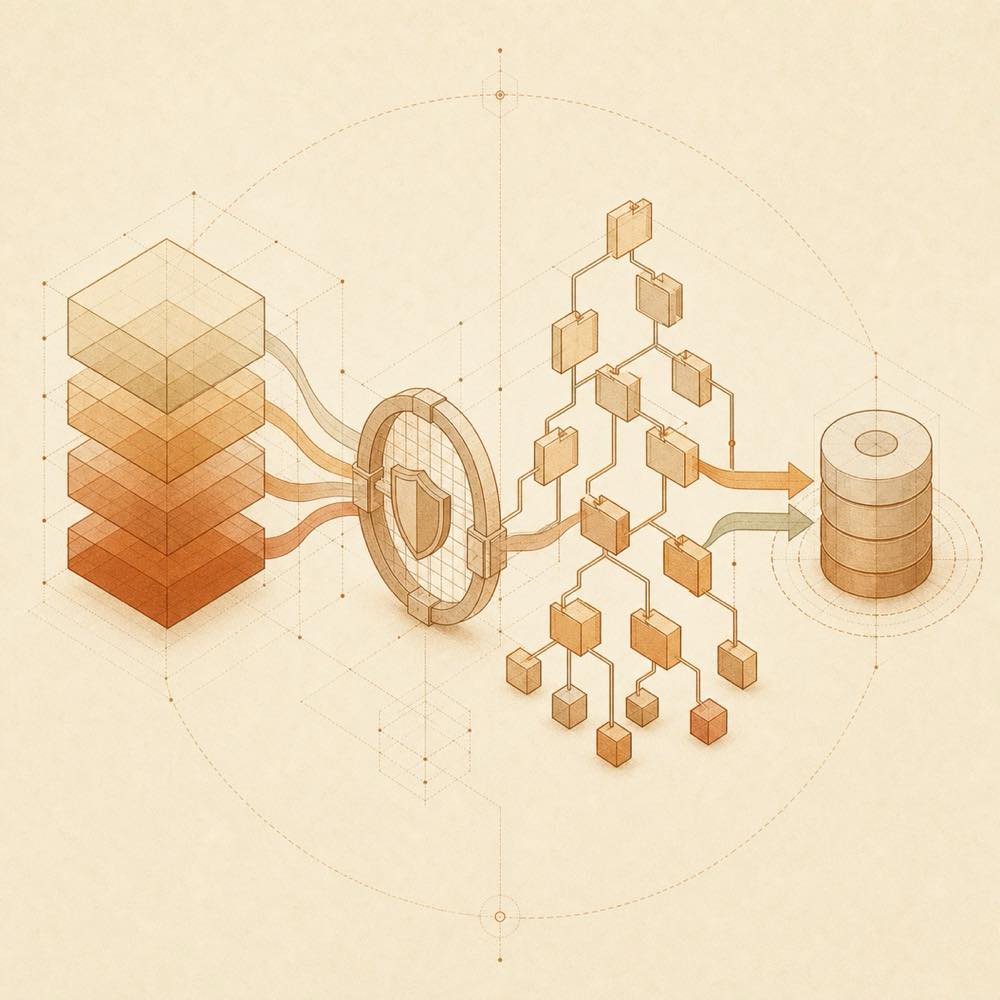
Session fragments pass through a guarded filesystem and converge into layered memory blocks.

dsh-memory-plugin is a DeepSeek Harness plugin that connects an agent to an OpenViking server for persistent memory and context retrieval. It adds pre-step processing that automatically recalls relevant context and injects a user profile, captures session data, guards viking:// URIs, and exposes memory recall and write tools.

OpenViking stores memories, resources and skills in a virtual viking:// filesystem. Its retrieval model can browse with ls, tree and find, inspect directory-level L0 abstracts and L1 overviews, then load L2 details when needed. After a session is committed, OpenViking can asynchronously extract user preferences and agent experience into long-term memory. The plugin therefore reads context from the OpenViking server and may write captured session information and extracted memories there.

dsh-memory-plugin is intended for agents that need cross-session user memory or OpenViking’s filesystem-style context model. It is not a self-contained memory store: an OpenViking server is required, and the README excerpt does not document plugin-specific configuration or setup values. The plugin also has a terminal surface, so it runs with the agent’s available terminal permissions; this matters when installing it in an agent that can access local files or execute commands.

dsh-memory-plugin documentation

How it behaves

The plugin integrates OpenViking at the DeepSeek Harness pre-step stage. Before a step runs, it recalls relevant context and injects a profile. It also captures session activity and provides tools for recalling and writing memory. The upstream summary identifies URI guarding for viking:// resources.

OpenViking represents memories, resources and skills as paths below viking://. Agents can browse this context with ls, tree and find. Retrieval starts with directory context and can move through three content layers:

  • L0: a short abstract for relevance checks
  • L1: an overview for planning
  • L2: the full content, loaded when needed

After a session commits, OpenViking asynchronously extracts user preferences and agent experience into long-term memory.

Data and server boundary

The plugin reads recalled context and profile information from an OpenViking server. Its session-capture and memory-write paths can send session information and memories back to that server. OpenViking organises data under viking://, including user memories, resources and skills. The plugin has a terminal surface and therefore should be evaluated with the terminal permissions available to the agent.

Requirements

An OpenViking server is required as the backend for the recall and write tools. The provided README excerpt does not specify the plugin’s configuration keys, default values, environment variables, server endpoint format, commands for starting the server, or supported platform and version requirements.

Written from the project's own documentation and kept in sync with it. Where the two disagree, the source is authoritative — read the README on GitHub

Same category

Alternatives to dsh-memory-plugin

coding-agents

vectorize-io

23k

Hindsight, agent memory that learns: long-term project memory with auto recall and retain, knowledge pages, deep reflection, and per-repo memory banks.

No one-line install — this plugin lives inside a larger repository and publishes no npm package.

GitHub sourcePython7d ago

AI review

coding-agents

What it is — Hindsight provides long-term project memory management for coding agents.

Who it is for — Developers using AI coding assistants such as Claude Code for code development should install it. If you use a non-Python language for the agent, you can choose other implementations.

Watch out — The plugin requires an API key or token and will execute shell commands. Sandbox testing has not been performed. No obvious pitfalls found.

The verdict — Without sandbox testing results, I would not install it.

Generated by grok-4.6, and a starting point rather than a verdict. Where it says a plugin installs or does not, that is from a real run in a clean profile — everything else is read off the repository. Trust the source over this.Read the source
2Details

ReMe

agentscope-ai

3.4k

Connects DeepSeek Harness to ReMe's local-first, self-evolving personal knowledge base: automatically captures completed main-agent conversations as user-owned Markdown memory, searches conversations and source material through reme_search with BM25, optional embeddings, and wikilink expansion, and schedules daily memory consolidation.

No one-line install — this plugin lives inside a larger repository and publishes no npm package.

GitHub sourcePython2d ago

AI review

ReMe

What it is — Integrates ReMe's local-first self-evolving personal knowledge base with DeepSeek Harness.

Who it is for — When running agents using DeepSeek Harness that require automatic capture of conversations as Markdown memory, this is suitable. If you do not need shared local workspace across agents, you can skip this plugin.

Watch out — No obvious pitfalls found. The plugin will execute shell commands.

The verdict — I would install it, but only if shell command execution is permitted.

Generated by grok-4.6, and a starting point rather than a verdict. Where it says a plugin installs or does not, that is from a real run in a clean profile — everything else is read off the repository. Trust the source over this.Read the source
1Source

typescript

agentscope-ai

3.4k

Connects DeepSeek Harness to ReMe's local-first, self-evolving personal knowledge base: automatically captures completed main-agent conversations as user-owned Markdown memory, searches conversations and source material through reme_search with BM25, optional embeddings, and wikilink expansion, and schedules daily memory consolidation.

No one-line install — this plugin lives inside a larger repository and publishes no npm package.

GitHub sourcePython13d ago

AI review

typescript

What it is — The plugin integrates DeepSeek Harness with ReMe's knowledge base to automatically capture main-agent conversations as user Markdown memory and schedule consolidation.

Who it is for — When managing main-agent conversations with DeepSeek Harness and wanting to capture completed dialogues as user-owned Markdown memory, this plugin provides integration. For users who do not want to share the workspace with ReMe, independent knowledge base tools offer a different perspective.

Watch out — The plugin requires manually allowing the build script when installing from source. Sandbox testing has not been completed. The plugin executes shell commands.

The verdict — If I am willing to manually allow the build script from source, I would install it because it connects conversations to persistent Markdown memory.

Generated by grok-4.6, and a starting point rather than a verdict. Where it says a plugin installs or does not, that is from a real run in a clean profile — everything else is read off the repository. Trust the source over this.Read the source
1Source

MemSearch

zilliztech

2.5k

Shared Markdown memory for DSH and other coding agents, with automatic capture, pre-step context injection, searchable recall, and memory-to-skill self-evolution through a review panel.

No one-line install — this plugin lives inside a larger repository and publishes no npm package.

GitHub sourcePython13d ago

AI review

MemSearch

What it is — MemSearch provides shared Markdown memory for DeepSeek Harness coding agents. It supports automatic capture, pre-step context injection, searchable recall, and memory-to-skill self-evolution through a review panel.

Who it is for — When building complex coding agents with DeepSeek Harness that require persistent context across sessions, MemSearch offers value. If your work involves only short-lived conversations without cross-platform memory needs, you can skip it.

Watch out — It will execute shell commands. Sandbox testing has not been done yet; no obvious issues were identified.

The verdict — I would install it because it enables memory to evolve into reusable skills, but only if you are willing to use it via subdirectory installation and accept shell command execution as a trade-off.

Generated by grok-4.6, and a starting point rather than a verdict. Where it says a plugin installs or does not, that is from a real run in a clean profile — everything else is read off the repository. Trust the source over this.Read the source
1Source

deja-vu

vshulcz

765

Memory for coding agents — Claude Code, Codex, Cursor and 17 others. Indexes the sessions they already wrote to disk, including months from before you installed it, and recalls them in any of them. No LLM, no embeddings, one local Go binary.

Installed cleanly when we ran it

GitHub sourceGo10d ago

AI review

deja-vu

What it is — Indexes coding agent sessions to disk for recall using a local Go binary without LLM.

Who it is for — Suitable when using Claude Code or Cursor for coding tasks that require recalling prior project solutions; not required if relying solely on local filesystem search without agent integration.

Watch out — Executes shell commands on install. Successfully tested in a fresh profile and registered by DeepSeek Harness. No obvious pitfalls found.

The verdict — I would install it because it supports sub-millisecond lookups over 5GB histories and passes sandbox testing.

Generated by grok-4.6, and a starting point rather than a verdict. Where it says a plugin installs or does not, that is from a real run in a clean profile — everything else is read off the repository. Trust the source over this.Read the source
1Source

deja-vu

vshulcz

742

Reads the session files twenty-two other coding agents on this machine already wrote — Claude Code, Codex, Cursor, VS Code Copilot Chat, opencode, OpenClaw, Hermes, Kimi, Cline, Zed and more — including sessions from before it was installed: six tools (deja_recall, deja_session, deja_blame, deja_fix, deja_how, deja_remember), a /deja command, and optional automatic recall added to the runtime context. Local BM25 index, no LLM, no embeddings, no network (dsh plugin --profile web add dsh-deja).

No one-line install — this plugin lives inside a larger repository and publishes no npm package.

GitHub sourceGo13d ago

AI review

deja-vu

What it is — Deja-vu is a local BM25 index memory plugin for coding agents that indexes session files from other agents on the machine including prior installations.

Who it is for — Developers who run multiple coding agents such as Claude Code, Cursor and Zed on the same machine and need to recall decisions from previous sessions can install it. Users who do not run any coding agents do not need session history indexing.

Watch out — Manual approval of the build script is required when installing from source. Static checks indicate it can execute shell commands. Sandbox testing was not performed.

The verdict — If you manage multiple coding agents on one machine and need recall of past sessions, it is worth installing; otherwise native context management is sufficient.

Generated by grok-4.6, and a starting point rather than a verdict. Where it says a plugin installs or does not, that is from a real run in a clean profile — everything else is read off the repository. Trust the source over this.Read the source
1Source