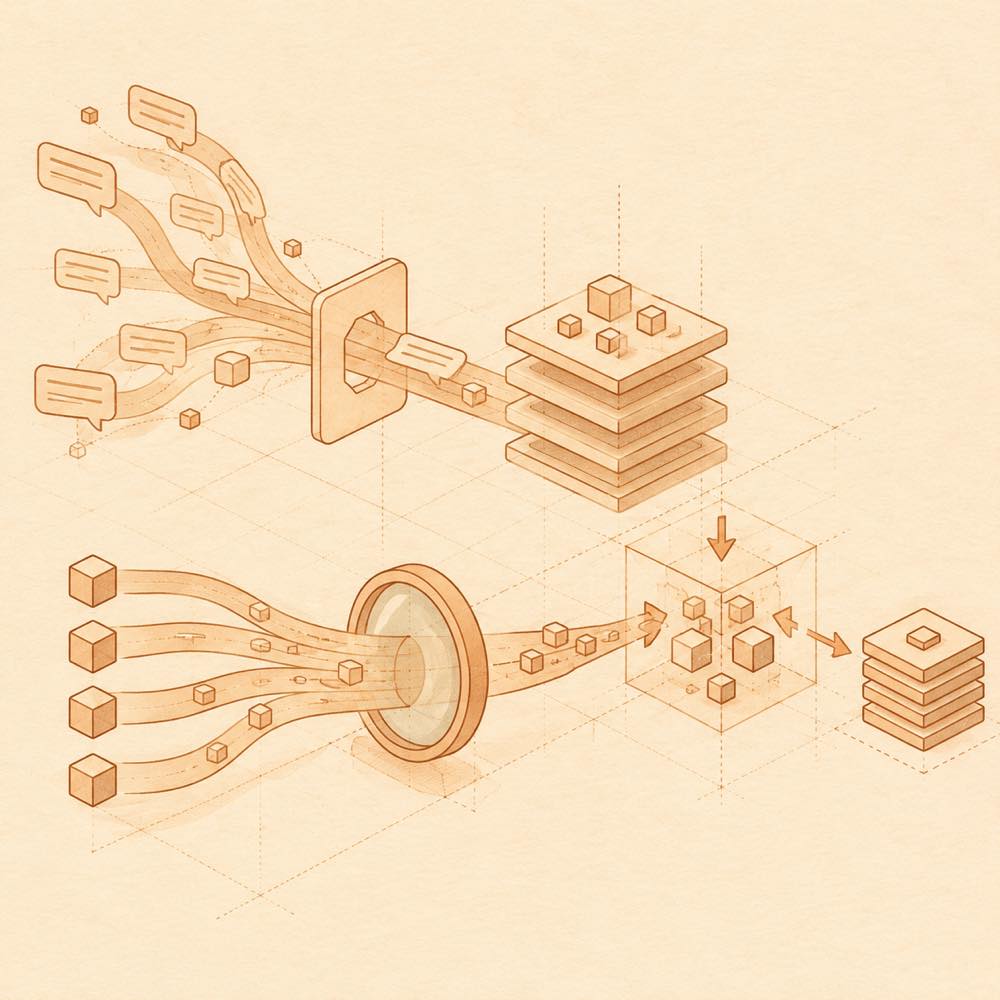
How dsh-mneme works
DeepSeek Harness loads dsh-mneme as a memory plugin. At the end of a conversation, the plugin distils selected content into atomic memories and stores them in SQLite, then mirrors them to Markdown files. Later retrieval combines semantic search with recency, importance and usage heat before injecting results into the session context. Hand-edited Markdown takes precedence when merged back into the database.
During idle periods, autoDream consolidates duplicate or stale memories and archives older material. autoSummarize can summarise content. Both use the host model by default. The plugin freezes conflicting memories for review and records provenance, edits, input snapshots, decisions and result hashes.
Configuring dsh-mneme
The README names these configuration keys:
| Key |
Behaviour |
dreamProvider and dreamModel |
Select the provider and model used for dreaming; configured values bypass the host model. |
summarizeProvider and summarizeModel |
Select the provider and model used for summarisation; configured values bypass the host model. |
memoryDir |
Overrides the memory database and Markdown mirror location. |
To keep consolidation fully offline, use a local host model and clear both provider/model pairs, or disable autoDream and autoSummarize. The MNEME_MEMORY_DIR environment variable can also select a custom memory directory.
Commands and integrations
DeepSeek Harness starts the web interface with dsh web; its settings page contains the memory panel. dsh-mneme-serve runs a standalone daemon so scripts, web clients and custom panels can access the same store. The mneme-memory package provides a zero-dependency stdio MCP server with six memory tools. An HTTP API is available for other plugins.
Requirements and storage
DeepSeek Harness must be version 0.1.x or 0.2.x. dsh-mneme requires Node 24+ because it uses node:sqlite. The default database is ~/.mneme/memory; previous ~/.dsh/memory and ~/.dsh/mneme locations remain readable. Connection settings for the CLI and MCP server are kept in ~/.dsh-mneme. Removing the plugin does not remove these files or any custom store.
Written from the project's own documentation and kept in sync with it. Where the two disagree, the source is authoritative — read the README on GitHub