
dsh-web-all
zhu1090093659
Plugin and skin collection for the DSH Web UI: task board, Git graph, right-side panel, remote mobile UI, pet, live token stats, and a skin center.
Installed cleanly when we ran it
npm packageTypeScript6d ago
e2mcc/dsh-popout-sidebar
Pop-out sidebar: lists artifacts and a file tree with multiple preview formats, pops out into a separate browser tab you can drag to another monitor, and coexists with other sidebar plugins simultaneously.
Install
via npm
Resolves a published tarball rather than cloning the repository, and installs without any extra setup. Swap `web` for your profile name if you run another one.
via GitHub · npm package
Installing from GitHub runs the project's build script, which pnpm blocks until you allowlist it — run the command once and pnpm prints the exact key to add under `allowBuilds` in ~/.dsh/profiles/web/pnpm-workspace.yaml.
The desktop app keeps its own profile, desktop, and only the dsh command it ships may change it — the npm-installed dsh refuses that profile. Install the command from the app menu (Manage dsh Command…), open Desktop once, quit it fully, run the line below, then reopen Desktop.
via npm
Resolves a published tarball rather than cloning the repository.
via GitHub · npm package
Installing from GitHub runs the project's build script, which pnpm blocks until you allowlist it — run the command once and pnpm prints the exact key to add under `allowBuilds` in ~/.dsh/profiles/desktop/pnpm-workspace.yaml.
Our install check ran in a web profile on npm's dsh, not in the desktop app.
What happened when we ran it
Installed cleanly when we ran it
Every command here is run in a throwaway container against a clean profile, and the result is whatever the harness recorded — not a guess from the source. Last run yesterdayon DeepSeek Harness 0.2.2-rc.5.
Show it in your README
For maintainers: the badge serves this listing's latest sandbox verdict, so a re-run updates it on its own — and it links readers to the full result here.
Due diligence
Security
No build script was blocked in our run.
Source: our sandbox install on DeepSeek Harness 0.2.2-rc.5, yesterday.
package.json declares no preinstall, install or postinstall script.
Source: package.json on GitHub, read at our last sync. prepare is not recorded; it runs only on a GitHub install, and shows up under build scripts when pnpm blocks it.
shell commands (bash, exec, spawn …)
Source: a keyword match on the README — a hint about what the plugin touches, not an analysis of its code.
Not an audit. These are the record of one install and two text scans; nobody has read this plugin's code on your behalf. Plugins run with your agent's permissions.
What it is — Provides pop-out sidebar in DSH to list artifacts and file tree.
Who it is for — When running DSH agent tasks requiring display of artifacts and file tree, users who need this are suitable to install this plugin. Users who prefer sidebar plugins to be fully integrated without pop-out can choose not to install this plugin because this plugin coexists with other sidebar plugins.
Watch out — Sandbox test passed: installed in fresh profile and registered by Harness. It will execute shell commands but no obvious issues found.
The verdict — I would install it because it coexists with other sidebar plugins.
Generated by grok-4.6, and a starting point rather than a verdict. Where it says a plugin installs or does not, that is from a real run in a clean profile — everything else is read off the repository. Trust the source over this.
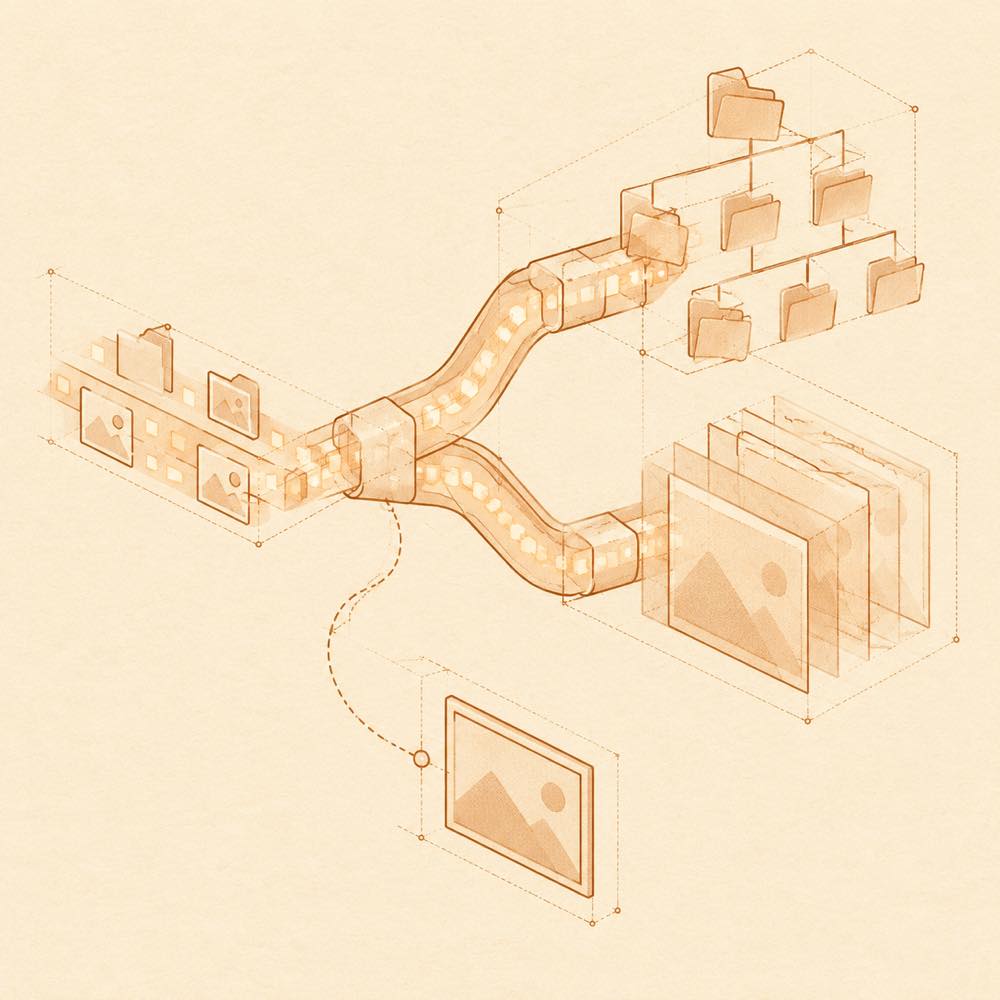
dsh-popout-sidebar is a DeepSeek Harness plugin that adds an artefact and workspace file-tree sidebar to the web interface, with previews and a separate browser tab view. DeepSeek Harness loads a host component and a browser client: the host listens for tools/result events from successful write and edit calls, and for tools/execute events from bash and pwsh. For the latter, it compares recursive fs.listDir workspace snapshots using version-token fingerprints, skipping large directories such as node_modules and .git. It exposes file operations through harness.handle and /popout-sidebar/* routes, while the client registers the panel through shell.overlay.
The panel can preview code and text, Markdown, images, PDFs and HTML, record edit diffs, copy paths or insert @path references, and remove entries from its list without deleting files. The separate /popout-sidebar tab synchronises the selected session through localStorage; settings use the dsh-popout-sidebar:settings key.
This suits developers who need a persistent view of agent-created files while working in the DeepSeek Harness web UI or across monitors. It is a poor fit when an existing sidebar already provides the required file view, or when workspace inspection is undesirable. The terminal-surface access reaches workspace directory listings and file contents, and observes files created or changed indirectly by bash and pwsh so those files can be added to the artefact list. The plugin requires a DeepSeek Harness web profile and a service restart plus browser hard refresh after installation.
DeepSeek Harness loads a host component and a web client. The client adds a persistent artefact button and floating panel through shell.overlay, including when no session is active. The host listens to tools/result for successful write and edit calls, extracting file_path; edit also records old_string and new_string. It listens to tools/execute for bash and pwsh, comparing workspace snapshots before and after execution.
Snapshot comparison uses recursive fs.listDir calls and version-token fingerprints. Large directories including node_modules and .git are skipped. The resulting entries are available through harness.handle RPC methods: artifacts.list, artifacts.read, artifacts.remove and artifacts.listDir.
DeepSeek Harness stores these settings in browser localStorage under dsh-popout-sidebar:settings:
| Setting | Default | Effect |
|---|---|---|
| Default expanded | On | Expands the panel when the page loads |
| Auto-refresh | On | Fetches the latest artefact list every 2 seconds while open |
| File tree | On | Shows the workspace file-tree tab |
| Minimum panel width | 20% |
Sets the minimum width; the range is 20–60% |
| Preview area default height | 70% |
Sets the preview/list split; the range is 20–80% |
The panel can still be resized by dragging its left edge or the preview divider. The default panel follows the main theme; the separate tab is light by default and accepts ?scheme=dark.
DeepSeek Harness exposes /popout-sidebar for the separate page. Its data routes are /popout-sidebar/data, /popout-sidebar/content, /popout-sidebar/media, /popout-sidebar/remove and /popout-sidebar/listdir. The client uses cross-tab localStorage synchronisation so the file tree follows workspace changes.
DeepSeek Harness installs this web plugin in the web profile. Updating uses dsh plugin --profile web update dsh-popout-sidebar. After host changes, restart dsh web; after client changes, hard-refresh the browser with Cmd/Ctrl+Shift+R. The README documents no environment variables or additional platform requirement.
Written from the project's own documentation and kept in sync with it. Where the two disagree, the source is authoritative — read the README on GitHub
Same category
zhu1090093659
Plugin and skin collection for the DSH Web UI: task board, Git graph, right-side panel, remote mobile UI, pet, live token stats, and a skin center.
Installed cleanly when we ran it
zhu1090093659
Task board for the dsh web GUI: a sidebar multi-column kanban whose cards run in real DSH agent sessions and can also be scheduled with cron expressions, executed host-side even with the browser closed.
Installed cleanly when we ran it
zhu1090093659
Plugin and skin collection for the DSH Web UI: task board, Git graph, right-side panel, remote mobile UI, pet, live token stats, and a skin center.
No one-line install — this plugin lives inside a larger repository and publishes no npm package.
ccch1mneyyy
Claude Code-style full-screen terminal UI: pixel-whale header, live status line, and streaming thought expansion.
Installed cleanly when we ran it
MeteorNOX
A fixed-corner whale widget for the DSH web GUI — balance, today's usage and per-turn cost with peak/off-peak pricing, editable balance-alert and daily-budget bubbles, a module-based custom bubble queue with A/B weighted choices and random lines or images, 30+ vendor templates (OpenAI, OpenRouter, Kimi, SiliconFlow, Ark, Zhipu, MiniMax and more) with per-model balance and subscription quota, plus task-end sound, imported audio, custom roles and a resource manager. Local-only, no telemetry.
Installed cleanly when we ran it