DSH Marketplace

dsh-emoji

hellodigua/dsh-emoji

Automatically add emojis to AI replies.

440TypeScriptMITSource

Install

Add dsh-emoji to DeepSeek Harness

via npm

Resolves a published tarball rather than cloning the repository, and installs without any extra setup. Swap `web` for your profile name if you run another one.

via GitHub · npm package

Installing from GitHub runs the project's build script, which pnpm blocks until you allowlist it — run the command once and pnpm prints the exact key to add under `allowBuilds` in ~/.dsh/profiles/web/pnpm-workspace.yaml.

What happened when we ran it

Installed cleanly when we ran it

Every command here is run in a throwaway container against a clean profile, and the result is whatever the harness recorded — not a guess from the source. Last run 18d ago.

Show it in your README

install verified — dshmarketplace

For maintainers: the badge serves this listing's latest sandbox verdict, so a re-run updates it on its own — and it links readers to the full result here.

Due diligence

Before you install dsh-emoji

  • Source of record: hellodigua/dsh-emoji — present in the community registry that DSH's own plugin market installs from.
  • Licensed under MIT.
  • A listing here is not a security review. Plugins run with your agent's permissions.

The AI take

What it is — Add inline emoji support to DeepSeek Harness replies via semantic markers that render as images.

Who it is for — When using DeepSeek Harness models for customer service or creative replies that require tone or emotion, this plugin inserts markers like ::happy::. If you prefer pure text responses in conversations, this plugin is not needed.

Watch out — No obvious issues found. After installation in a fresh profile, it registers with harness. Custom ZIP uploads take effect on the next call.

The verdict — I would install it because it allows switching emoji styles within the same conversation to fit different expression needs.

Generated by grok-4.6, and a starting point rather than a verdict. Where it says a plugin installs or does not, that is from a real run in a clean profile — everything else is read off the repository. Trust the source over this.

What dsh-emoji does

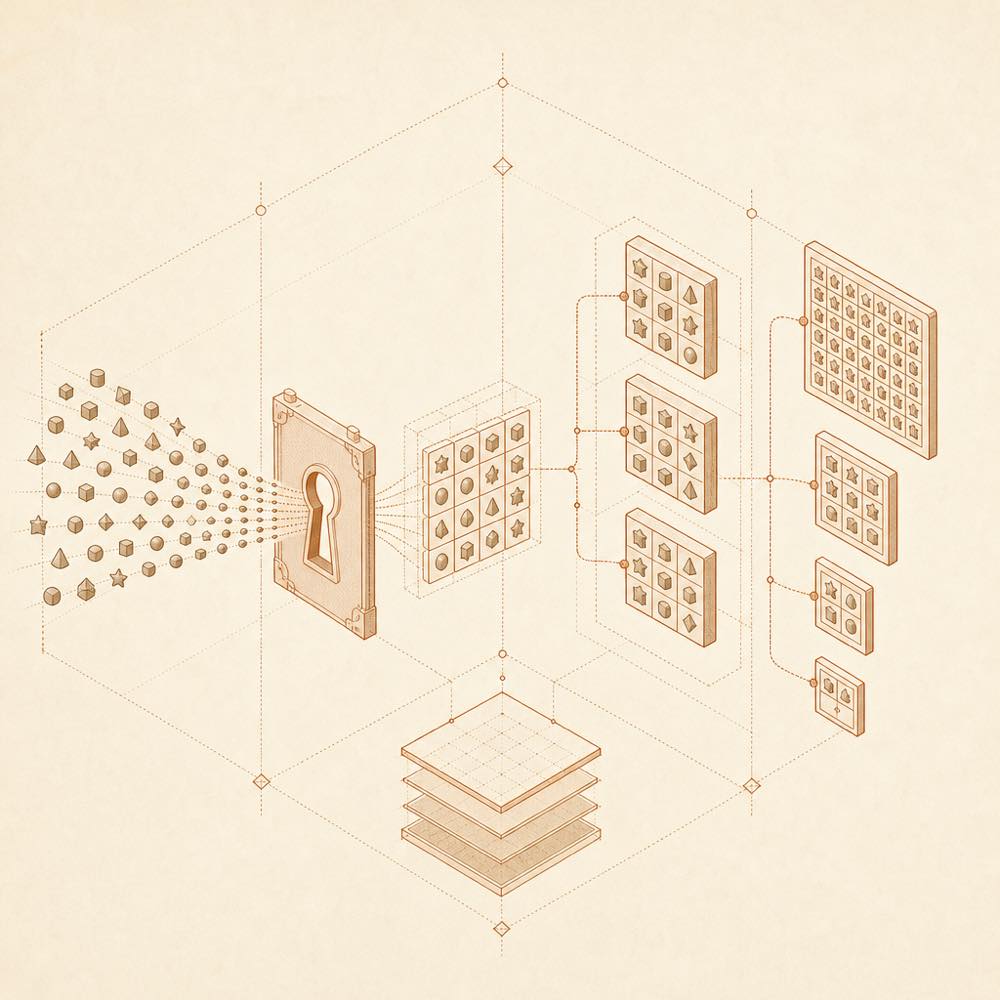
Character glyphs pass through a transformation gate into selectable inline image tiles.

dsh-emoji is a DeepSeek Harness plugin that adds switchable inline emoji images to AI replies. DeepSeek Harness reads the model’s approved Unicode emoji output and, on the Host side, replaces 40 recognised semantic emojis with images from the selected pack. This requires no additional model call and does not infer emotions from surrounding text.

The plugin’s settings let an operator turn emoji use off, choose 智能 or 高频 frequency, select a pack, choose one of four image sizes, and provide additional prompt instructions. Uploaded ZIP packs are validated and stored under $DSH_HOME/emoji-packs/ (by default ~/.dsh/emoji-packs/); settings retain the selected id@version. The same 40 semantic keys are used by built-in and custom packs.

dsh-emoji is intended for conversations where decorative, community-style expressions are useful and where the Web Profile can load a plugin compatible with @deepseek-ai/dsh@0.1.0-rc.7. It is a poor fit when replies must remain free of inserted images, when arbitrary Unicode emoji should be transformed, or when emotion should be inferred automatically. Code, links, ordinary Markdown images and unrecognised emoji remain unchanged, and frequency choices still depend on the model following the supplied prompt.

dsh-emoji documentation

Configuring dsh-emoji

After DeepSeek Harness loads dsh-emoji in the Web Profile, its settings card, 设置 → 插件 → 表情(Whale Emoji), provides these controls:

Setting Behaviour
关闭 Disables emoji use.
智能 The default; allows up to 3 images per reply when they help express meaning.
高频 Requests one suitable emoji in every reply, with up to 4 images per reply.
Additional prompt Adds instructions for selection, tone and usage context.
Pack and size Selects the image set and one of four sizes: small, normal, large-ish and large.

Changes apply from the next reply without restarting the Web Host. The frequency policy still depends on model compliance.

How dsh-emoji processes replies

The model selects from 42 permitted Unicode emojis representing 40 stable semantic keys. DeepSeek Harness’s Host converts recognised output to an inline image from the active pack. The conversion also recognises 😄, 🙂 and images produced by dsh-emoji. It leaves other Unicode emoji, code, links, double-colon text and ordinary Markdown images unchanged. Multiple plugin images must be separated by valid body text, while the same image may recur in different positions.

Uploading dsh-emoji packs

The settings card accepts a ZIP containing pack.json and an images/ directory, optionally inside one same-named directory. pack.json must declare schemaVersion: 1, keySet: "dsh-emoji-core@1", an id, a name and a SemVer version. The archive must provide exactly one PNG for each of the 40 standard keys. ZIP size is limited to 20 MiB, extracted size to 80 MiB, each file to 2 MiB, and image dimensions to 512 pixels. DeepSeek Harness stores packs in $DSH_HOME/emoji-packs/. Removing a pack from the selection list does not delete its bytes, preserving versioned URLs in historical messages.

DeepSeek Harness compatibility

The current release targets npm @deepseek-ai/dsh@0.1.0-rc.7 and declares DSH peers ^0.1.0-rc.7. Local development requires Node.js ^22.19.0 || >=24 and pnpm 11.

Written from the project's own documentation and kept in sync with it. Where the two disagree, the source is authoritative — read the README on GitHub

Same category

Alternatives to dsh-emoji

dsh-pet

zhu1090093659

7.6k

A whale-girl companion for the dsh web GUI: animations follow the agent state, with pat interactions and a feeding mechanic that raises intimacy from a calf to deep-sea bonds.

Installed cleanly when we ran it

npm packageTypeScript23d ago

AI review

dsh-pet

What it is — dsh-pet is a whale-girl companion plugin for the DeepSeek Harness Web GUI, featuring animations that follow agent state changes with pat interactions and a feeding mechanic that raises intimacy from a calf to deep-sea bonds.

Who it is for — If you execute AI agent tasks in the DeepSeek Harness Web GUI and need a companion that reacts to agent state, dsh-pet is suitable. If you use the DSH Desktop rather than the Web GUI, you do not need to install this plugin.

Watch out — Sandbox testing passed: it was successfully installed in a fresh profile and registered by harness. No obvious issues were found.

The verdict — I would install it because the feeding mechanic raises intimacy from a calf to deep-sea bonds, adding value when agent state visualization is required in your tasks.

Generated by grok-4.6, and a starting point rather than a verdict. Where it says a plugin installs or does not, that is from a real run in a clean profile — everything else is read off the repository. Trust the source over this.Read the source
Source

dsh-pet

PC2005-cloud

753

Desktop pet for the DSH Web UI with 25 transparent animations, screen wandering, click reactions and drag, plus a reproducible asset-generation pipeline.

Installed cleanly when we ran it

npm packageTypeScript14d ago

AI review

dsh-pet

What it is — The plugin provides a desktop pet that runs in the DeepSeek Harness Web UI, with transparent animations, screen wandering, click reactions, and drag support.

Who it is for — Users who run the DeepSeek Harness Web interface and want a desktop pet that wanders on screen and reacts to clicks should install this plugin. Those who do not need screen movement or click responses should not install it.

Watch out — No obvious issues were found. Sandbox testing has not been conducted yet. When installing from source code, the build script requires manual approval first.

The verdict — I would install it because it includes a reproducible asset generation pipeline that allows creation of custom animations.

Generated by grok-4.6, and a starting point rather than a verdict. Where it says a plugin installs or does not, that is from a real run in a clean profile — everything else is read off the repository. Trust the source over this.Read the source
Details

dsh-ads

Nagi-ovo

634

Parody ads in 2005-Chinese-web style: sidebar banners, in-chat feeds, corner popups, and a close button whose hit area is smaller than it looks. All fictional.

Installed cleanly when we ran it

npm packageTypeScript20d ago

AI review

dsh-ads

What it is — Insert 2005 Chinese web style fictional ads into sidebar, chat, and inference interruptions.

Who it is for — Users wanting 2005 Chinese web style fictional ads in sidebar, chat and inference using DSH in Chinese mode. English mode users can skip it.

Watch out — Sandbox test passed: installed in new profile and registered to profile. No obvious issues found.

The verdict — I will install it because clicking ads opens real repositories.

Generated by grok-4.6, and a starting point rather than a verdict. Where it says a plugin installs or does not, that is from a real run in a clean profile — everything else is read off the repository. Trust the source over this.Read the source
Details
371

Desktop-native BigFish companion for DeepSeek Harness — real Agent status, always on top on Windows.

Installed cleanly when we ran it

npm packageJavaScript22d ago

AI review

dsh-dafeiyu

What it is — BigFish is a desktop companion plugin for DeepSeek Harness that displays the real agent work status always on top.

Who it is for — Users who perform agent tasks on Windows desktop with DeepSeek Harness need real-time status display. People not doing agent tasks don't need it.

Watch out — Sandbox testing passed: installed successfully in a new profile and registered by harness. No obvious issues found. It will execute shell commands.

The verdict — I would install it for Windows desktop agent tasks needing persistent status visibility, because it provides real event feedback from actual agent activities.

Generated by grok-4.6, and a starting point rather than a verdict. Where it says a plugin installs or does not, that is from a real run in a clean profile — everything else is read off the repository. Trust the source over this.Read the source
1Source
339

Desktop pet (QQ-pet style): floats in the corner, draggable, feedable, playable.

Installed cleanly when we ran it

npm packageJavaScript1mo ago

AI review

whale-girl

What it is — A QQ-pet style floating desktop pet supporting drag, feed and play.

Who it is for — Users conducting sessions and tasks in the DSH web GUI who need a pet companion for interaction. Users not using the DSH Web GUI don't need this, because it is built for the DSH Web GUI.

Watch out — Sandbox test passed after installation in fresh profile and registration into the profile. No obvious issues found.

The verdict — I would install it because it converts task completion, sessions and companionship time into pet levels, titles and memories.

Generated by grok-4.6, and a starting point rather than a verdict. Where it says a plugin installs or does not, that is from a real run in a clean profile — everything else is read off the repository. Trust the source over this.Read the source
1Details
115

Meme search, the fun way: describe the vibe, and the agent finds and sends a real meme that actually fits.

Installed cleanly when we ran it

npm packageJavaScript10d ago

AI review

dsh-expression

What it is — dsh-meme is a DeepSeek Harness plugin that allows searching and sending memes through text descriptions.

Who it is for — In conversations with models that don't support image input, users who want to insert memes into replies are suitable for this plugin. Users who rely entirely on the model to generate all visual elements can skip it because the plugin only provides text marking.

Watch out — Sandbox test passed, the plugin can be installed in a new profile and registered into the profile by Harness. It will execute shell commands as a static check prompt. No obvious issues found.

The verdict — I would install it because it enables the model to send replies with memes using only text tokens, without needing image input capability from the model.

Generated by grok-4.6, and a starting point rather than a verdict. Where it says a plugin installs or does not, that is from a real run in a clean profile — everything else is read off the repository. Trust the source over this.Read the source
1Source